
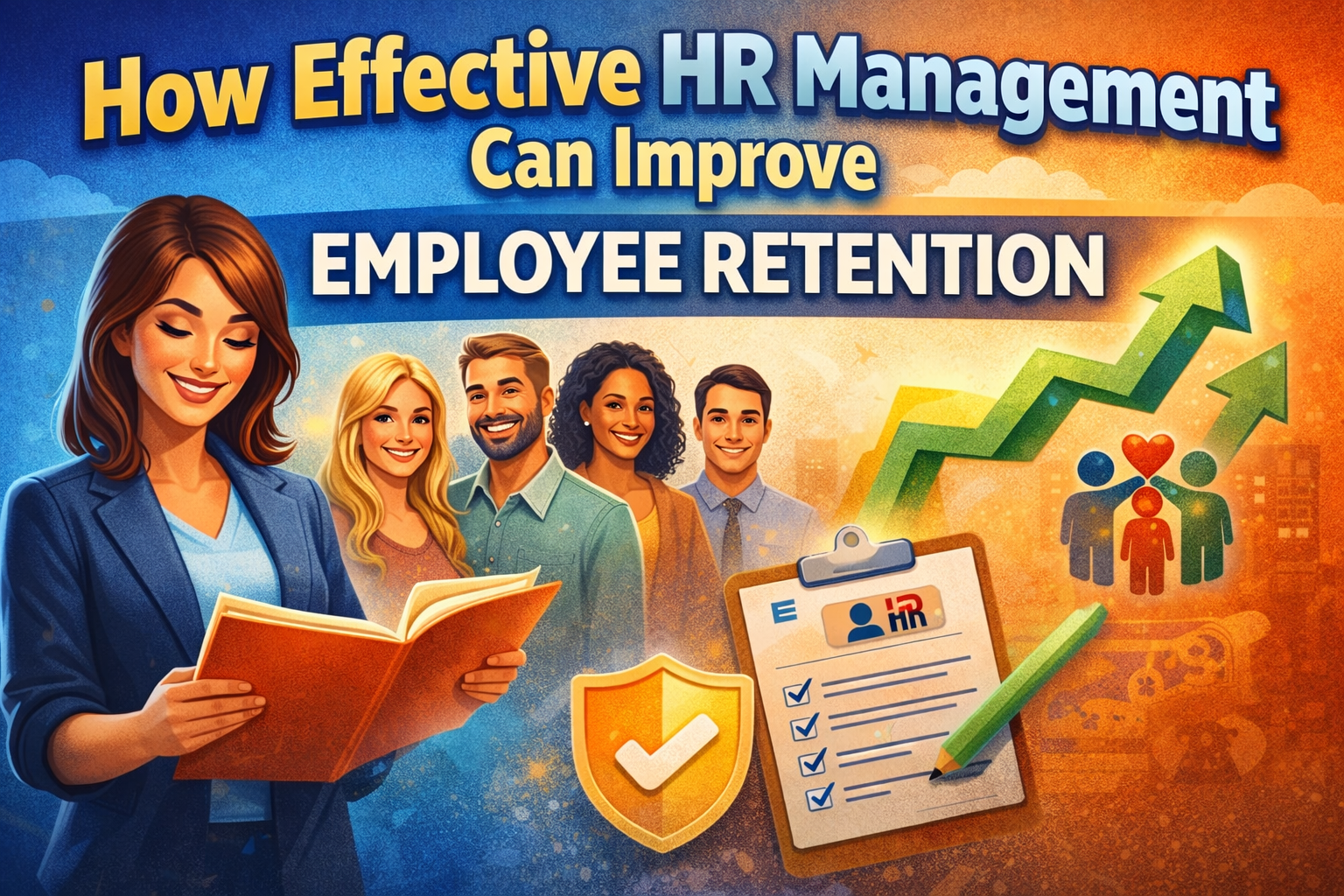
How Effective HR Management Can Improve Employee Retention
Unlocking the Secret to Happy, Loyal, and High‑Performing Teams
In today’s competitive job market, one of the biggest challenges organizations of all sizes face is employee retention — particularly in small and mid‑sized companies. You’ve likely heard the saying: “Hiring is hard, but keeping great employees is even harder.” That rings true now more than ever.
But there’s good news: with effective human resources (HR) management, you can significantly improve employee retention, strengthen your company culture, and build a workforce that’s engaged, motivated, and ready to grow with your business.
Let’s dive in.
Table of Contents
-
🤔 Why Employee Retention Matters More Than Ever
-
📌 What Effective HR Management Really Means
-
🧠 The Connection Between HR and Retention
-
🔑 Core HR Strategies That Improve Employee Retention
-
Recruitment & Onboarding
-
Career Development & Training
-
Performance Management
-
Recognition & Rewards
-
Compensation & Benefits
-
Work‑Life Balance & Wellness
-
Company Culture & Communication
-
Employee Feedback & Engagement Surveys
-
Technology in HR (HRIS & Cloud Tools)
-
-
🛠 Best Practices for HR Managers
-
📊 Measuring Retention & HR Impact
-
🚀 Real‑World Success Stories
-
💡 Common HR Mistakes That Hurt Retention
-
❓ FAQ
-
🏁 Final Thoughts & Next Steps
1. 🤔 Why Employee Retention Matters More Than Ever
Employee retention isn’t just a buzzword — it’s a business imperative.
Let’s break down why it matters so much:
📌 1. The Cost of Turnover Is High
Replacing an employee can cost up to 50–200% of their annual salary, when you factor in recruiting, onboarding, training, productivity loss, and team disruption.
(If someone earns $40,000 per year, turnover costs could range from $20,000 to $80,000! That adds up fast.)
📌 2. Retention Boosts Productivity
Experienced employees know your business, your customers, and your way of working. When they leave, productivity dips as new hires learn the ropes.
📌 3. Happy Employees Stay Longer
Employees who feel valued tend to stay — and engaged employees perform better, drive innovation, and inspire others.
📌 4. Employee Experience Impacts Brand Reputation
Your employees are your brand ambassadors. When they remain with you and speak positively about your company, you attract stronger talent.
2. 📌 What Effective HR Management Really Means
So what is effective HR management?
At its core, it’s about putting people first while aligning workforce strategy with business goals.
That includes:
✔ Hiring the right talent
✔ Developing and nurturing employees
✔ Aligning expectations
✔ Providing the tools and support employees need
✔ Rewarding performance fairly
✔ Building an inclusive, positive culture
✔ Helping employees grow and feel valued
Effective HR isn’t just paperwork and policies — it’s a strategic partner in building a loyal, capable team.
3. 🧠 The Connection Between HR and Retention
Now for the central question: How does effective HR management directly affect retention?
Think of it as a ripple effect:
-
Great HR processes create positive employee experiences.
-
Positive experiences lead to higher employee satisfaction.
-
Higher satisfaction boosts engagement and loyalty.
-
Loyalty means employees stay longer.
When HR understands what employees value — and delivers on it — retention improves naturally.
4. 🔑 Core HR Strategies That Improve Employee Retention
Below are the major HR levers that directly impact whether employees stay or leave:
A. Recruitment & Onboarding: Start Strong
The employee lifecycle begins at recruitment, and first impressions matter more than you think.
Why It Matters
If you hire the wrong person or give a poor onboarding experience, that employee may disengage or leave within months.
Best Practices
✔ Write clear job descriptions
✔ Set realistic expectations during interviews
✔ Assess for both skills and cultural fit
✔ Provide structured onboarding
✔ Assign mentors or “buddies” to new hires
A well‑onboarded employee feels confident, welcomed, and ready to contribute — which boosts retention from Day 1.
B. Career Development & Training: Growth Matters
Employees stay when they grow.
Lack of professional development is one of the top reasons people leave jobs.
How HR Can Help
-
Offer skills training (online/in‑person)
-
Support career path planning
-
Provide coaching and leadership development
-
Foster cross‑department opportunities
When employees see a future with your company, they’re far more likely to stick around.
C. Performance Management: Clear Goals & Feedback
Performance reviews shouldn’t be yearly checkboxes — they should be conversations.
Key Elements
✔ Regular check‑ins
✔ Clear performance expectations
✔ Constructive feedback
✔ Two‑way dialogue (employee voice matters)
Employees want to know: “Am I doing well? What can I improve? What’s next?”
Effective performance management helps answer those questions and keeps employees engaged.
D. Recognition & Rewards: People Want to Be Appreciated
Recognition is a huge driver of retention.
Not everyone is motivated by money — often, feeling valued is even more important.
Ways to Recognize Employees
🏆 Public praise
💡 Peer recognition programs
🎉 Spot bonuses
🎖 Certificates or awards
📣 Company‑wide shout‑outs
Even small, sincere recognition can go a long way.
E. Compensation & Benefits: Fair and Competitive
Of course, money matters — but it’s not the only thing that matters.
What Modern Employees Care About
✔ Competitive salaries
✔ Health and wellness benefits
✔ Pension or retirement plans
✔ Flexible working options
✔ Paid time off
✔ Parental leave
When your compensation matches or exceeds market expectations, employees feel valued and stay longer.
F. Work‑Life Balance & Wellness: Avoiding Burnout
Workplaces that ignore employee wellbeing pay the price in retention.
HR Can Support Balance By
-
Encouraging time off
-
Offering flexible hours
-
Promoting mental health resources
-
Hosting wellness programs
Employees who feel supported in life and work are likelier to stay.
G. Company Culture & Communication: The Glue That Binds
Culture isn’t just ping‑pong tables and beanbags — it’s the way people feel at work.
What Great Cultures Share
✔ Trust and respect
✔ Open communication
✔ Shared purpose and values
✔ Inclusive environments
✔ Collaboration, not silos
When employees feel like they belong, retention naturally improves.
H. Employee Feedback & Engagement Surveys: Listening Matters
Employees want a voice.
HR should regularly gather feedback — and act on it.
Why Feedback Helps Retention
✔ Identifies issues before they escalate
✔ Shows employees their opinions matter
✔ Supports continuous improvement
Tools like engagement surveys, one‑on‑one interviews, and suggestion boxes make your workforce feel heard.
I. Technology in HR: Better Tools, Better Retention
In 2026, technology plays a huge role in HR effectiveness.
HR Software (HRIS), payroll tools, performance platforms, and engagement apps streamline tasks and reduce friction.
Benefits include:
✔ Faster processes
✔ Better data insights
✔ Improved employee self‑service
✔ Consistent communication
Employees who feel supported with efficient systems are more satisfied and more likely to stay.
5. 🛠 Best Practices for HR Managers
Here are proven ways HR can enhance its impact and improve retention:
✔ Be Human First
People remember how you made them feel.
✔ Communicate Often and Clearly
Ambiguity breeds anxiety — clarity breeds trust.
✔ Invest in Leadership Training
Managers shape employee experiences. Great leadership = higher retention.
✔ Encourage Innovation and Ownership
Employees who solve problems and contribute ideas feel invested in their work.
✔ Provide Flexible Work Arrangements
Remote work, flexible scheduling, and hybrid models are no longer perks — they’re expected.
✔ Use Data to Guide Decisions
Track engagement, performance, turnover, and satisfaction. Data shows why problems occur.
6. 📊 Measuring Retention & HR Impact
If you can’t measure it, you can’t improve it.
Key Metrics to Track
📍 Turnover Rate
📍 Retention Rate
📍 Time to Fill Roles
📍 Employee Net Promoter Score (eNPS)
📍 Performance & Engagement Scores
📍 Exit Interview Insights
These metrics help HR teams identify patterns and make strategic improvements.
7. 🚀 Real‑World Success Stories
Here are a few real‑world examples of HR strategies improving retention:
📍 Case Study: Tech Startup Boosts Retention by 30%
A tech startup struggled with turnover because employees felt stuck.
HR introduced:
-
Structured career paths
-
Mentorship programs
-
Regular feedback cycles
-
Competitive benefits
Within 12 months, retention improved by 30%.
📍 Case Study: Retail Chain Reduces Turnover in Peak Season
A retail company saw high turnover during busy months.
HR:
✔ Introduced wellness programs
✔ Improved shift‑scheduling flexibility
✔ Provided recognition incentives
Turnover dropped significantly and employee satisfaction rose.
8. 💡 Common HR Mistakes That Hurt Retention
Even well‑intentioned HR teams can make mistakes. Here’s what to avoid:
❌ Ignoring Employee Feedback
❌ Neglecting Manager Training
❌ Underestimating Work‑Life Balance
❌ Treating HR as Administrative Only
❌ Not Updating HR Processes With Technology
❌ Failing to Align Culture With Behavior
These pitfalls are fixable but often overlooked.
9. ❓ FAQ
Q: How quickly can HR improvements impact retention?
A: Some changes (like recognition programs) show results quickly, while others (like culture shifts) may take months. Consistency is key.
Q: Do small businesses need formal HR?
A: Yes — even basic HR structures improve retention dramatically compared to no HR at all.
Q: Can technology really help retention?
A: Absolutely. Efficient HR and communication tools empower employees and reduce administrative frustration.
10. 🏁 Final Thoughts & Next Steps
Employee retention isn’t an accident — it’s the outcome of thoughtful HR strategy and intentional action.
To recap:
➡️ The cost of turnover is high
➡️ HR influences every stage of the employee experience
➡️ Strategic HR practices improve engagement and loyalty
➡️ Technology enables better, faster HR outcomes
Great HR isn’t just about processes — it’s about people. And when you invest in your people, they invest in you.