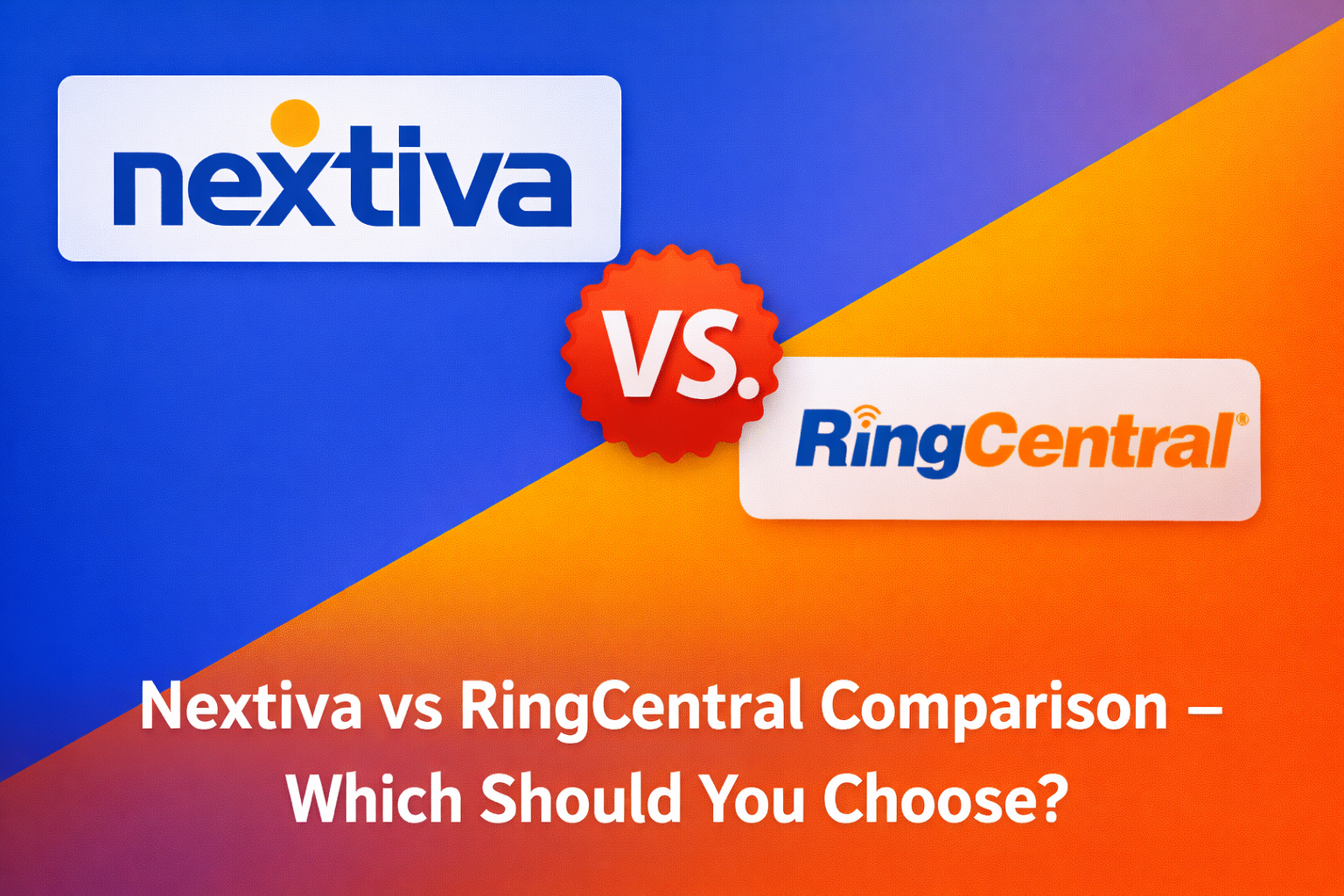
Choosing the right business phone system can feel overwhelming, especially when you’re comparing two industry leaders like Nextiva and RingCentral. I’ve personally tested, reviewed, and analyzed both platforms from the perspective of a growing business that values reliability, scalability, customer experience, and ROI.
If you’re a startup, small business, mid-sized company, or even an enterprise looking for a modern VoIP and unified communications solution, this comparison will help you make a confident, informed decision.
In this in-depth guide, I’ll break down Nextiva vs RingCentral across features, pricing, call quality, usability, integrations, customer support, scalability, and real-world use cases — and then help you decide which one is best for your business.
Quick Overview: Nextiva vs RingCentral
Before diving deep, here’s a high-level summary based on my experience:
-
Nextiva is best for businesses that want simplicity, excellent customer support, strong call reliability, and an all-in-one communication platform that’s easy to manage.
-
RingCentral is ideal for larger teams, global organizations, and businesses that need advanced integrations, customization, and enterprise-grade collaboration tools.
Both are excellent — but they serve slightly different audiences.
What Is Nextiva?
Nextiva is a cloud-based business communications platform focused on VoIP calling, team messaging, video conferencing, CRM integrations, and customer experience tools. It’s widely known for its reliability and award-winning customer support.
What stood out to me immediately when using Nextiva is how intuitive and clean the platform feels. You don’t need to be a tech expert to get started, and everything from call routing to analytics is presented in a clear, business-friendly way.
Key Highlights of Nextiva
-
Business VoIP phone system
-
Unlimited calling in the U.S. and Canada
-
Call routing, auto-attendant, voicemail-to-email
-
Built-in CRM and customer insights
-
Team chat and video meetings
-
Strong focus on customer experience (CX)
Nextiva markets itself as an all-in-one communication hub, and in my experience, it delivers well on that promise.
What Is RingCentral?
RingCentral is one of the most established names in cloud communications. It’s a comprehensive unified communications as a service (UCaaS) platform that offers voice, video, messaging, contact center solutions, and deep third-party integrations.
RingCentral really shines when it comes to advanced features, global scalability, and enterprise flexibility. It’s designed for businesses that want maximum control, customization, and depth of integration.
Key Highlights of RingCentral
-
Enterprise-grade VoIP and UCaaS
-
Advanced video conferencing and team messaging
-
Robust app marketplace with hundreds of integrations
-
International calling and global availability
-
Contact center and omnichannel communication
-
Highly customizable workflows
RingCentral is powerful — but with that power comes complexity.
Ease of Use and Setup Experience
Nextiva: Clean, Simple, and Beginner-Friendly
From setup to daily usage, Nextiva is incredibly easy to use. I found the onboarding process straightforward, even for non-technical team members. The admin dashboard is intuitive, making tasks like adding users, setting call flows, and managing voicemail effortless.
If your business doesn’t have a dedicated IT team, Nextiva’s usability is a huge advantage.
RingCentral: Powerful but More Complex
RingCentral’s interface isn’t bad — but it is more complex. There are more menus, more settings, and more customization options. For advanced users, this is a benefit. For small teams or beginners, it can feel overwhelming at first.
In my experience, RingCentral requires a bit more time to fully master, especially if you plan to use its advanced features.
Winner for Ease of Use: Nextiva
Call Quality and Reliability
Nextiva Call Performance
Nextiva is known for its 99.999% uptime claim, and in real-world use, call quality has been consistently excellent. Calls are clear, stable, and reliable, even during peak business hours.
What impressed me most is how well Nextiva handles call routing and failover. If there’s ever a disruption, the system automatically reroutes calls to keep your business running.
RingCentral Call Performance
RingCentral also delivers high-quality calls, especially for international and enterprise-level communication. However, I’ve noticed that call quality can depend heavily on network configuration and setup.
Once properly configured, RingCentral performs extremely well — but it may require more IT involvement.
Winner for Reliability and Simplicity: Nextiva
Winner for Global and Enterprise Use: RingCentral
Features Comparison: What Do You Actually Get?
Core Calling Features (Both Platforms)
Both Nextiva and RingCentral include:
-
Unlimited VoIP calling
-
Auto-attendant
-
Call forwarding and routing
-
Voicemail-to-email
-
Call recording
-
Mobile and desktop apps
So on the basics, they’re evenly matched.
Advanced Features: Where They Differ
Nextiva Advanced Features
-
Built-in CRM with customer insights
-
Call analytics and reporting
-
Customer journey tracking
-
Unified inbox for voice, email, and chat
-
Simple automation tools
Nextiva’s advanced tools are designed to improve customer experience, not overwhelm users.
RingCentral Advanced Features
-
Extensive app integrations
-
Advanced call routing logic
-
Workflow automation
-
AI-powered meeting insights
-
Global phone numbers
-
Enterprise-grade contact center tools
RingCentral’s feature set is broader and deeper — especially for large teams.
Winner for Simplicity and CX: Nextiva
Winner for Advanced Customization: RingCentral
Pricing Breakdown: Nextiva vs RingCentral
Pricing is often the deciding factor, so let’s talk honestly.
Nextiva Pricing Overview
Nextiva offers tiered pricing based on features and number of users. The pricing becomes more affordable as your team grows.
What I like about Nextiva’s pricing:
-
Transparent plans
-
No unnecessary upsells
-
Great value for small to mid-sized businesses
You get a lot of functionality even on lower tiers.
RingCentral Pricing Overview
RingCentral’s pricing is generally higher, especially when you start adding advanced features, integrations, and international calling.
While the platform offers immense value for enterprises, smaller businesses may find themselves paying for features they don’t fully use.
Pricing Verdict
-
Best value for small businesses: Nextiva
-
Best investment for large organizations: RingCentral
If budget efficiency matters, Nextiva is easier to justify.
Integrations and App Ecosystem
Nextiva Integrations
Nextiva integrates well with popular tools like:
-
CRM platforms
-
Help desk software
-
Productivity tools
-
Email and calendar apps
It covers what most businesses need without overcomplicating things.
RingCentral Integrations
RingCentral excels here. Its app marketplace is massive, supporting:
-
Salesforce
-
HubSpot
-
Microsoft Teams
-
Google Workspace
-
Slack
-
Hundreds of enterprise tools
If integrations are mission-critical, RingCentral has the edge.
Winner: RingCentral
Customer Support and Service Experience
Nextiva Customer Support
This is where Nextiva truly shines. Their customer support is responsive, knowledgeable, and genuinely helpful. I’ve experienced minimal wait times and clear, actionable solutions.
For businesses that value hands-on support, Nextiva is hard to beat.
RingCentral Customer Support
RingCentral’s support is solid, but response times can vary depending on your plan. Enterprise customers tend to get priority, while smaller businesses may experience longer wait times.
Winner: Nextiva
Scalability and Growth Potential
Nextiva for Growing Businesses
Nextiva scales well for small to mid-sized businesses. Adding users, upgrading plans, and expanding features is seamless.
If you’re planning steady growth without extreme complexity, Nextiva is a great long-term choice.
RingCentral for Enterprises
RingCentral is built for scale. Global offices, thousands of users, international numbers, and complex workflows — it handles it all.
For large or rapidly expanding organizations, RingCentral offers unmatched scalability.
Security and Compliance
Both platforms take security seriously:
-
Data encryption
-
Secure data centers
-
Compliance with industry standards
-
Admin-level access controls
RingCentral offers more advanced compliance options for regulated industries, while Nextiva covers most standard business needs effectively.
Use Case Scenarios: Which One Fits You Best?
Choose Nextiva If:
-
You’re a small or mid-sized business
-
You want ease of use and fast onboarding
-
Customer experience is a priority
-
You don’t have a large IT team
-
You want excellent support and reliability
Choose RingCentral If:
-
You’re a large or enterprise-level organization
-
You need global communication capabilities
-
Advanced integrations are critical
-
You require extensive customization
-
You have IT resources to manage complexity
My Personal Verdict: Nextiva vs RingCentral
After thoroughly reviewing both platforms, here’s my honest take:
-
Nextiva is the better choice for most businesses. It delivers powerful features, excellent call quality, outstanding customer support, and great value without unnecessary complexity.
-
RingCentral is the superior option for enterprises that need advanced functionality, global reach, and deep integrations — and are willing to pay for it.
If I were advising a small or growing business today, I’d confidently recommend Nextiva as the smarter, more efficient investment.
Final Thoughts: Which Should You Choose?
There’s no “wrong” choice here — only the right choice for your business needs.
If you want:
-
Simplicity
-
Reliability
-
Great customer support
-
Strong ROI
👉 Go with Nextiva
If you want:
-
Enterprise-grade customization
-
Global scalability
-
Advanced integrations
👉 Go with RingCentral
Whichever you choose, both platforms are proven leaders in business communications. The key is aligning the tool with your growth strategy, team size, and communication priorities.